
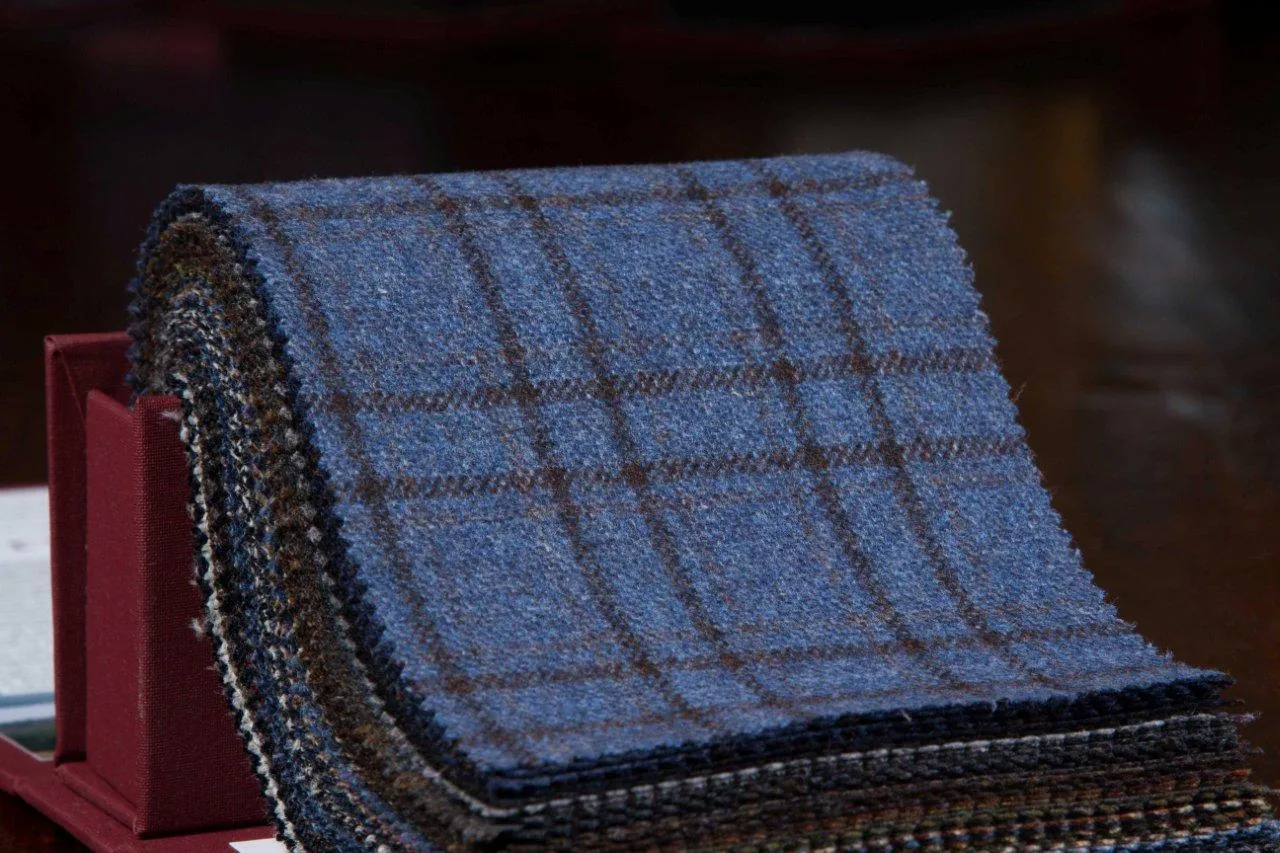
The fabric you choose decides how your suit looks, how it feels and how long it lasts. A great cut in the wrong cloth will never sit quite right. Here is how to think about it before your first fitting.
Start with when and where you will wear it
A suit for a July garden wedding and a suit for a January board meeting need different cloth. Calgary swings from hot, dry summers to long cold winters, so many clients start with one versatile year-round suit and add seasonal pieces later.
- Year-round: a mid-weight worsted wool, roughly 250 to 290 grams per metre.
- Summer: lighter wools, wool and linen blends, or open weaves that breathe.
- Winter: heavier wools, flannels and cashmere blends that hold warmth.
Understand weight before Super numbers
You will see labels like Super 120s or Super 150s. These describe how fine the wool fibre is. Finer fibres feel softer and drape beautifully, but they can be more delicate. For a suit you will wear often, a Super 110s to 130s is a practical sweet spot. Weight tells you more about warmth and structure than the Super number does.
Pick a weave that suits your life
- Plain weave: smooth, light and breathable. Good for travel and warm days.
- Twill: durable with a subtle diagonal line. Resists wrinkles well.
- Flannel: brushed and soft with a matte finish. Warm and relaxed.
- Herringbone and birdseye: textured patterns that add interest up close.
Choose colour for how often you will wear it
If this is your first custom suit, navy and charcoal are the most useful colours you can own. They work for business, weddings and evenings, and they pair with almost any shirt and tie. Once you have the foundations, mid-grey, brown, green and subtle checks are a great way to express more personality.
Touch it in person
Photos cannot show you how a cloth drapes, how it recovers when you crush it in your hand or how it feels against your skin. At your consultation we will put swatches in your hands, explain the trade-offs and help you choose with confidence.